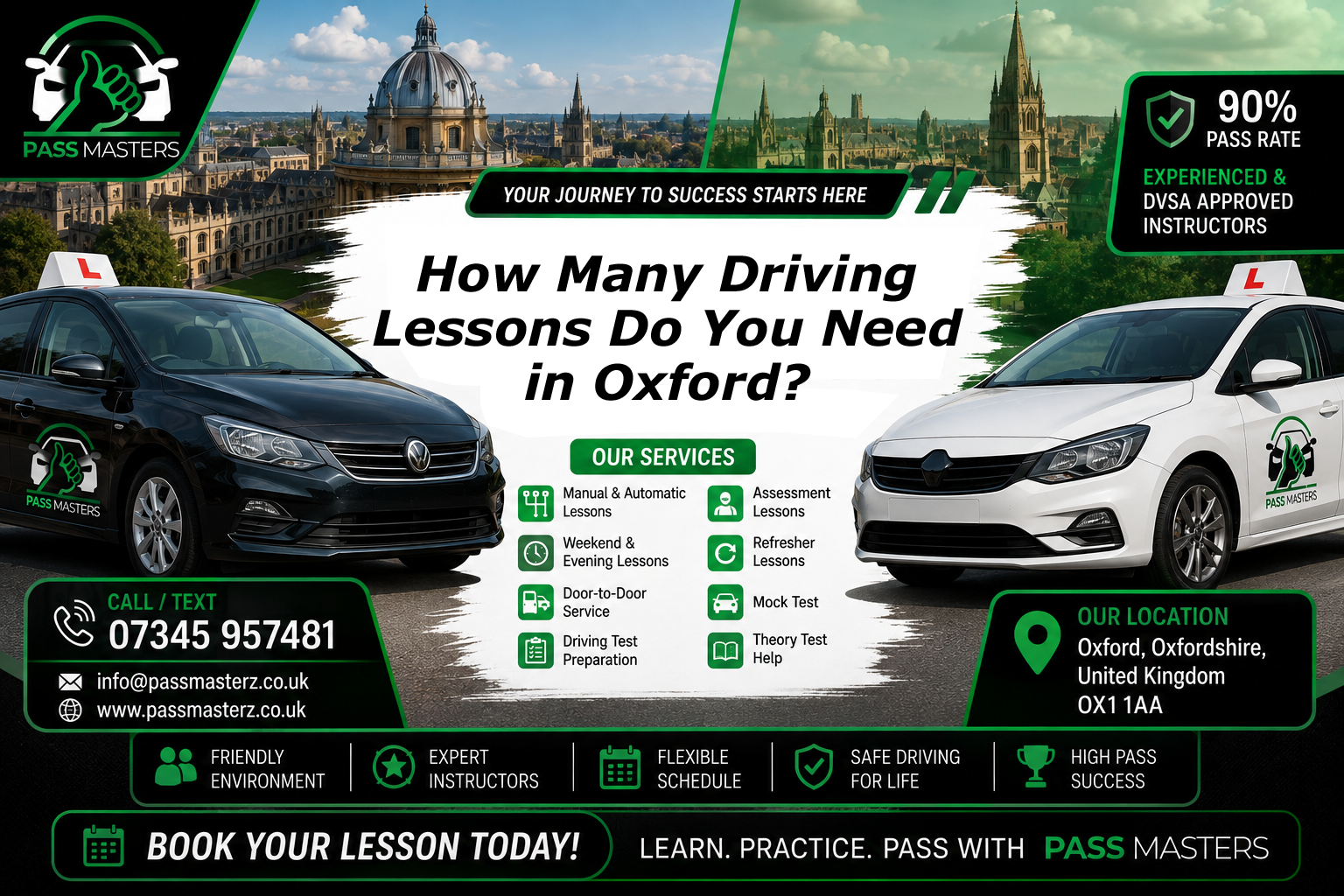
Learning to drive is an exciting step towards greater independence, but one of the most common questions new learners ask is, “How many driving lessons do I actually need?” The answer isn’t the same for everyone. Some learners become confident quickly, while others prefer to take more time to build their skills before booking the practical driving test.
If you’re planning to learn in Oxford, you’ll benefit from a variety of road types, including quiet residential streets, busy city roads, roundabouts, dual carriageways, and nearby rural routes. These different driving environments help learners develop the confidence and experience needed to become safe and responsible drivers.
At Pass Masters Driving School, we understand that every learner is unique. Whether you choose manual or automatic driving lessons, our experienced instructors create personalised lesson plans that match your learning style and progress. Instead of focusing only on passing the driving test, we help you build the skills needed for a lifetime of safe driving.
In this guide, we’ll explain what affects the number of driving lessons you may need, how you can learn more efficiently, and what to expect during your driving journey in Oxford.
Is There a Set Number of Driving Lessons?
One of the biggest misconceptions is that everyone needs the same number of lessons before passing their driving test.
The truth is that there is no fixed number.
Every learner has different:
- Learning abilities
- Confidence levels
- Previous driving experience
- Availability for lessons
- Practice opportunities
- Comfort behind the wheel
Some people feel confident after fewer lessons, while others need extra practice to become fully prepared.
The goal isn’t simply to pass the test; it’s to become a safe and confident driver for life.
The DVSA Recommendation
The Driver and Vehicle Standards Agency (DVSA) provides general guidance for learner drivers in the UK.
On average, many learners benefit from around:
- Professional driving lessons with a qualified instructor
- Additional supervised practice with family or friends, where possible
These figures are only averages, not requirements. Some learners may need fewer lessons, while others may take longer depending on their individual progress.
At Pass Masters, your instructor will regularly assess your development and let you know when you’re approaching test standard.
What Affects the Number of Driving Lessons You Need?
Several factors influence how quickly you’ll become test-ready.
Previous Driving Experience
Have you driven before?
Even a small amount of previous experience can make a difference.
Perhaps you’ve:
- Driven on private land
- Practised with family
- Taken lessons previously
- Driven in another country
If so, you may already understand some basic vehicle control, allowing you to progress more quickly.
Complete beginners usually need more time to develop confidence and safe driving habits.
Manual or Automatic Lessons
The type of car you choose can also affect how quickly you learn.
Manual Driving Lessons
Learning in a manual car involves mastering:
- Clutch control
- Gear changes
- Hill starts
- Smooth coordination
Because there are more skills to learn, some students require additional lessons before feeling completely confident.
However, passing your test in a manual vehicle allows you to drive both manual and automatic cars.
Automatic Driving Lessons
Automatic vehicles remove the need for changing gears and operating a clutch.
This allows learners to concentrate on:
- Road awareness
- Steering
- Observation
- Hazard perception
- Safe decision-making
Many beginners find automatic lessons easier, especially if they feel nervous or want a simpler learning experience.

Your Confidence Level Matters
Confidence plays a huge role in learning to drive.
Some learners naturally feel relaxed behind the wheel from their very first lesson. Others may experience nervousness, especially during:
- Busy traffic
- Roundabouts
- Parking
- Hill starts
- Dual carriageways
This is completely normal.
A patient instructor will gradually introduce more challenging situations as your confidence grows.
At Pass Masters, lessons are designed to progress at a pace that suits you, ensuring you never feel overwhelmed.
How Often Should You Take Driving Lessons?
The frequency of your lessons can significantly affect how quickly you learn.
Weekly Lessons
Many learners choose one or two lessons each week.
Benefits include:
- Steady progress
- Time to absorb new skills
- Flexible scheduling
- Consistent improvement
Regular lessons help you remember what you’ve learned and continue building confidence.
Intensive Driving Courses
Some learners prefer intensive driving courses. These involve multiple lessons over a short period.
They can be ideal if you:
- Need a licence quickly
- Already have some driving experience
- Want to stay focused without long gaps between lessons
Pass Masters offers intensive lessons designed to help learners progress efficiently while maintaining high driving standards.
Does Private Practice Help?
Yes. If you have access to a suitable supervising driver, additional practice can be extremely valuable.
Practising outside your professional lessons allows you to:
- Improve confidence
- Reinforce instructor guidance
- Become familiar with different roads
- Build experience in real traffic conditions
However, it’s important that any private practice follows the techniques taught by your instructor to avoid developing incorrect driving habits.
Learning to Drive in Oxford
Oxford provides an excellent environment for learner drivers because you’ll experience a wide variety of road conditions during your lessons.
These include:
Residential Roads
Perfect for beginners learning:
- Moving off
- Steering
- Mirror checks
- Basic junctions
Busy City Traffic
Driving in Oxford’s town centre helps learners develop:
- Patience
- Observation
- Traffic awareness
- Safe positioning
Roundabouts
Oxford contains many roundabouts of different sizes.
Regular practice helps learners become confident when:
- Choosing lanes
- Giving way
- Exiting safely
- Reading traffic flow
Dual Carriageways
As your confidence grows, you’ll learn how to:
- Join faster roads safely
- Maintain an appropriate speed
- Overtake safely
- Use mirrors effectively
Rural Roads
The countryside surrounding Oxford introduces learners to:
- Narrow lanes
- Sharp bends
- National speed limit roads
- Meeting oncoming traffic safely
Experience on different road types prepares you for everyday driving after passing your test.

Signs You’re Making Good Progress
Many learners wonder how they’ll know they’re getting close to test standard.
Although everyone’s journey is different, there are several positive signs that indicate you’re progressing well.
You may be ready for more advanced lessons when you can:
- Drive smoothly without constant instructor guidance.
- Perform mirror checks naturally.
- Change speed confidently according to road conditions.
- Handle roundabouts with increased confidence.
- Complete parking manoeuvres safely.
- Make good decisions at junctions.
- Stay calm in busy traffic.
- Follow road signs without confusion.
As your lessons continue, your instructor will gradually reduce the amount of help they provide, allowing you to make more independent decisions behind the wheel. This growing confidence is one of the clearest indicators that you’re moving closer to being ready for your practical driving test.
Tips to Reduce the Number of Driving Lessons
While everyone learns at their own pace, there are a few simple ways to make faster progress.
- Take lessons regularly to keep your skills fresh.
- Revise the Highway Code and prepare for your theory test early.
- Ask your instructor questions whenever you’re unsure.
- Stay calm and don’t let small mistakes affect your confidence.
- If possible, get extra supervised practice with a qualified driver.
- Review feedback after each lesson and focus on improving weaker areas.
Remember, the goal isn’t to finish quickly; it’s to become a safe and confident driver.
Common Mistakes Learner Drivers Make
Every beginner makes mistakes, and that’s a normal part of learning. Some of the most common include:
- Forgetting mirror checks before changing direction.
- Braking too harshly or too late.
- Poor positioning on the road.
- Hesitating too much at junctions.
- Driving too slowly because of nerves.
- Struggling with clutch control in a manual car.
With regular lessons and professional guidance, these mistakes become much less common over time.
Why Choose Pass Masters Driving School?
Choosing the right driving school can make a big difference to your learning experience. At Pass Masters Driving School, we provide friendly, professional instruction for learners across Oxford.
We offer:
- Manual and automatic driving lessons
- Standard, intensive, refresher, and Pass Plus courses
- Experienced and licensed instructors
- Weekend and evening lessons
- Door-to-door pick-up service
- Learning videos and personalised training
- Lessons available in English, Arabic, Hindi, Urdu, and Punjabi
- A high pass rate and excellent customer reviews
Our aim is to help every learner become a confident, safe, and responsible driver.
Frequently Asked Questions
How Many Driving Lessons Does the Average Learner Need?
The number varies from person to person depending on confidence, experience, learning progress, and how often lessons are taken.
Are Automatic Lessons Quicker Than Manual Lessons?
Many learners find automatic cars easier because there are no gears or clutch to manage. However, the time needed depends on each learner’s individual progress.
Can I Take Lessons Before Passing My Theory Test?
Yes. You can start practical lessons before passing your theory test, but you’ll need to pass it before booking your practical driving test.
Do Intensive Driving Courses Help?
Yes. Intensive courses can help you learn more quickly if you’re able to commit to frequent lessons and maintain consistent practice.
Does Pass Masters Offer Weekend Lessons?
Yes. Weekend and evening lessons are available for learners with busy schedules.
Conclusion
There is no fixed answer to how many driving lessons you need in Oxford, as every learner progresses at a different pace. Factors such as your confidence, previous experience, lesson frequency, and whether you choose manual or automatic lessons all play a role.
At Pass Masters Driving School, our experienced instructors focus on helping you become more than just test-ready. We provide supportive, professional training that builds confidence, improves road safety, and prepares you for a lifetime of driving. Whether you’re a complete beginner or returning for refresher lessons, we’re here to help you succeed every step of the way.