Passing your driving test is one of the biggest milestones on your journey to becoming an independent driver. After weeks or months of learning, your practical driving test is your opportunity to demonstrate the skills you’ve developed and show that you’re ready to drive safely on your own. While it’s natural to feel a little nervous, good preparation can make a huge difference to your confidence and performance.
If you’re taking your Oxford driving test, you’ll experience a variety of road conditions, including busy city streets, residential areas, roundabouts, traffic lights, dual carriageways, and nearby country roads. Understanding what to expect before test day will help you feel more relaxed and better prepared.
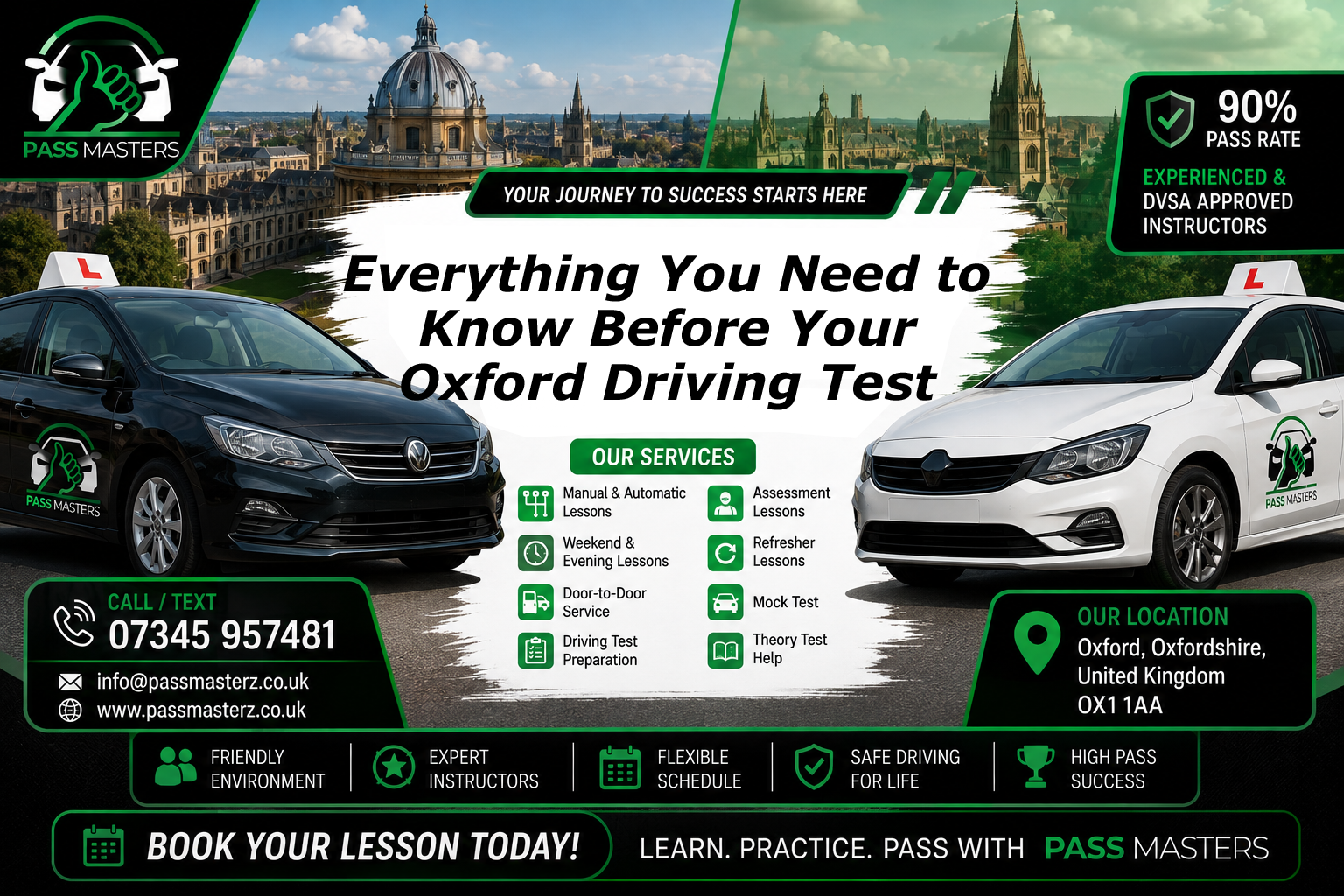
At Pass Masters Driving School, we prepare learners for success by providing professional manual and automatic driving lessons, mock driving tests, and personalised instruction that builds confidence as well as driving skills. In this guide, we’ll cover everything you need to know before taking your Oxford driving test.
Why Preparation Is So Important
Many learners believe the practical test is only about driving, but preparation starts long before you arrive at the test centre.
Being well prepared helps you:
- Feel more confident.
- Reduce test-day nerves.
- Avoid unnecessary mistakes.
- Understand the test process.
- Improve your chances of passing.
The better prepared you are, the easier it becomes to focus on driving safely and making good decisions.
Booking Your Oxford Driving Test
Before booking your practical driving test, you must:
- Hold a valid UK provisional driving licence.
- Pass your Theory Test.
- Be confident driving in different road conditions.
- Receive confirmation from your instructor that you’re ready.
Your driving instructor will usually recommend booking your test when you’re consistently driving at test standard during lessons.
What Should You Bring on Test Day?
Before leaving for the test centre, make sure you have everything you need.
This includes:
- Your UK provisional driving licence.
- Appropriate footwear for driving.
- Comfortable clothing.
- Any required glasses or contact lenses.
Arriving 10–15 minutes early can also help you settle your nerves before the test begins.
Understanding the Driving Test
Many learners feel less anxious once they know what the driving test involves.
The practical test is designed to assess whether you can drive safely and independently in real traffic conditions.
It normally includes:
- An eyesight check.
- Vehicle safety questions (“Tell Me” and “Show Me”).
- General driving.
- One reverse manoeuvre.
- Independent driving.
- Normal stopping and, if requested, an emergency stop.
The examiner isn’t looking for perfection; they want to see safe and responsible driving.
Eyesight Check
Your test begins with a simple eyesight test.
You’ll be asked to read a vehicle number plate from the required distance. If you normally wear glasses or contact lenses, remember to bring them with you.
Good vision is essential for safe driving, so don’t forget this important step.
“Tell Me” and “Show Me” Questions
At the beginning of your test, the examiner will ask one “Tell Me” question about vehicle safety. Later during the drive, you’ll be asked one “Show Me” question while driving.
Examples include:
- How to check tyre pressure.
- How to test the brakes.
- How to use the windscreen washer.
- How to operate the rear demister.
- How to switch on the headlights.
Your instructor will practise these questions during your lessons so you’re fully prepared.

The General Driving Section
The largest part of your practical test involves everyday driving.
You’ll drive on different roads around Oxford while the examiner observes your ability to:
- Move off safely.
- Stop smoothly.
- Follow speed limits.
- Use mirrors correctly.
- Position the vehicle properly.
- Approach junctions safely.
- Drive through roundabouts.
- Respond to traffic signs.
- React to other road users.
Remember that the examiner wants to see calm, safe driving rather than perfect driving.
Independent Driving
During part of the test, you’ll drive independently by either:
- Following road signs, or
- Following directions from a sat nav.
This section assesses your ability to make safe decisions without constant instruction.
Don’t worry if you accidentally take the wrong turning. As long as you do so safely, it won’t normally affect your result.
Practise Oxford’s Different Road Types
Oxford provides excellent preparation for everyday driving because you’ll encounter many different road layouts.
Residential Roads
You’ll practise:
- Moving off.
- Meeting parked cars.
- Basic junctions.
- Speed control.
Busy Town Centre Roads
Driving in busier areas helps improve:
- Observation.
- Traffic awareness.
- Patience.
- Decision-making.
Roundabouts
Oxford has many roundabouts, making them an important part of your preparation.
Practise:
- Lane discipline.
- Mirror checks.
- Signalling.
- Timing your entry.
- Safe exits.
Dual Carriageways
As your confidence grows, you’ll learn to:
- Join traffic safely.
- Overtake when appropriate.
- Maintain a safe speed.
- Keep a safe following distance.
Country Roads
Nearby rural roads teach valuable skills, including:
- Reading bends.
- Managing higher speed limits.
- Passing oncoming vehicles safely.
- Adjusting speed for changing conditions.
Experience on all of these road types helps prepare you for both your test and everyday driving.
Common Mistakes Learners Make During the Test
Most driving test faults are small mistakes that can be avoided with regular practice.
Some of the most common include:
- Forgetting mirror checks.
- Poor observation at junctions.
- Incorrect signalling.
- Driving too slowly because of nerves.
- Poor positioning on roundabouts.
- Incomplete stops at junctions.
- Hesitation when it’s safe to proceed.
- Lack of awareness of pedestrians or cyclists.
Your instructor will work with you during lessons to correct these habits before test day.
Tips to Stay Calm Before Your Driving Test
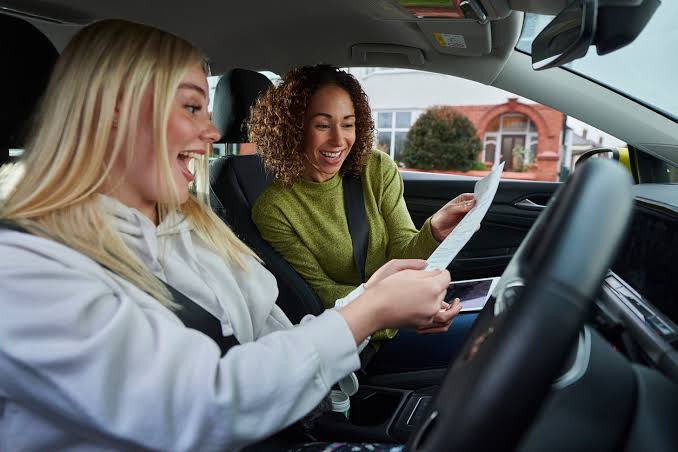
Feeling nervous is completely normal. Even confident drivers can feel pressure on test day.
Here are a few simple ways to stay relaxed:
- Get a good night’s sleep before your test.
- Eat a light meal beforehand.
- Arrive early at the test centre.
- Listen carefully to the examiner’s instructions.
- Focus on one situation at a time.
- Don’t panic if you make a small mistake.
- Remember that safe driving is more important than perfect driving.
A calm mindset can help you make better decisions and enjoy a smoother driving experience throughout your test.
Oxford Driving Test Route Tips
Although your exact driving test route will vary, your instructor will prepare you for the types of roads and situations commonly found around Oxford. During your lessons, you’ll practise driving on residential streets, busy junctions, roundabouts, dual carriageways, and roads with different speed limits.
Instead of trying to memorise test routes, focus on developing strong driving habits. Safe observation, correct mirror use, good road positioning, and confident decision-making will help you perform well wherever the examiner takes you.
Why Choose Pass Masters Driving School?
Choosing the right driving school is one of the best ways to prepare for your practical test. At Pass Masters Driving School, we provide professional training that helps learners become confident, safe, and responsible drivers.
We offer:
- Manual and automatic driving lessons.
- Standard, intensive, refresher, and Pass Plus courses.
- Friendly DVSA-approved instructors.
- Mock driving tests.
- Weekend and evening lessons.
- Door-to-door pick-up service.
- Learning videos to support your progress.
- Lessons available in English, Arabic, Hindi, Urdu, and Punjabi.
- A high pass rate and excellent customer reviews.
Our personalised approach ensures every learner receives the support and guidance needed to feel fully prepared for test day.
Frequently Asked Questions
How Long Does the Oxford Practical Driving Test Take?
The practical driving test usually lasts around 40 minutes and includes the eyesight check, vehicle safety questions, general driving, and independent driving sections.
Can I Use My Instructor’s Car for the Test?
Yes. Many learners choose to take their practical test in their instructor’s vehicle because they are already familiar with it.
What Happens If I Make a Small Mistake?
A minor mistake doesn’t automatically mean you’ll fail. The examiner looks at your overall ability to drive safely and responsibly throughout the test.
Should I Take a Driving Lesson Before My Test?
Yes. Many learners benefit from a lesson before the test to warm up, practise key skills, and boost confidence.
Does Pass Masters Offer Mock Driving Tests?
Yes. Mock driving tests are available to help learners experience realistic test conditions and identify areas that need improvement before the real exam.
Conclusion
Preparing for your Oxford driving test is about much more than learning how to control a car. It involves building confidence, understanding road safety, developing good driving habits, and practising in a variety of traffic conditions. By arriving well prepared and staying calm throughout the test, you’ll give yourself the best possible chance of success.
At Pass Masters Driving School, we’re committed to helping every learner become a skilled and confident driver. With experienced instructors, flexible manual and automatic driving lessons, mock driving tests, and personalised training, we’ll support you from your first lesson right through to passing your practical test. If you’re getting ready for your Oxford driving test, let Pass Masters help you take the final step towards earning your driving licence with confidence.